
Choosing the right pillow material is the single most critical factor in achieving proper spinal alignment and truly restorative sleep. The market is dominated by three major contenders, each offering a fundamentally different sleep experience: Down (the soft, plush luxury), Feather (the affordable, structured support), and Memory Foam (the consistent, contouring support).
The “best” material isn’t universal—it depends entirely on your sleeping position, personal preference for softness, and whether you suffer from neck pain.
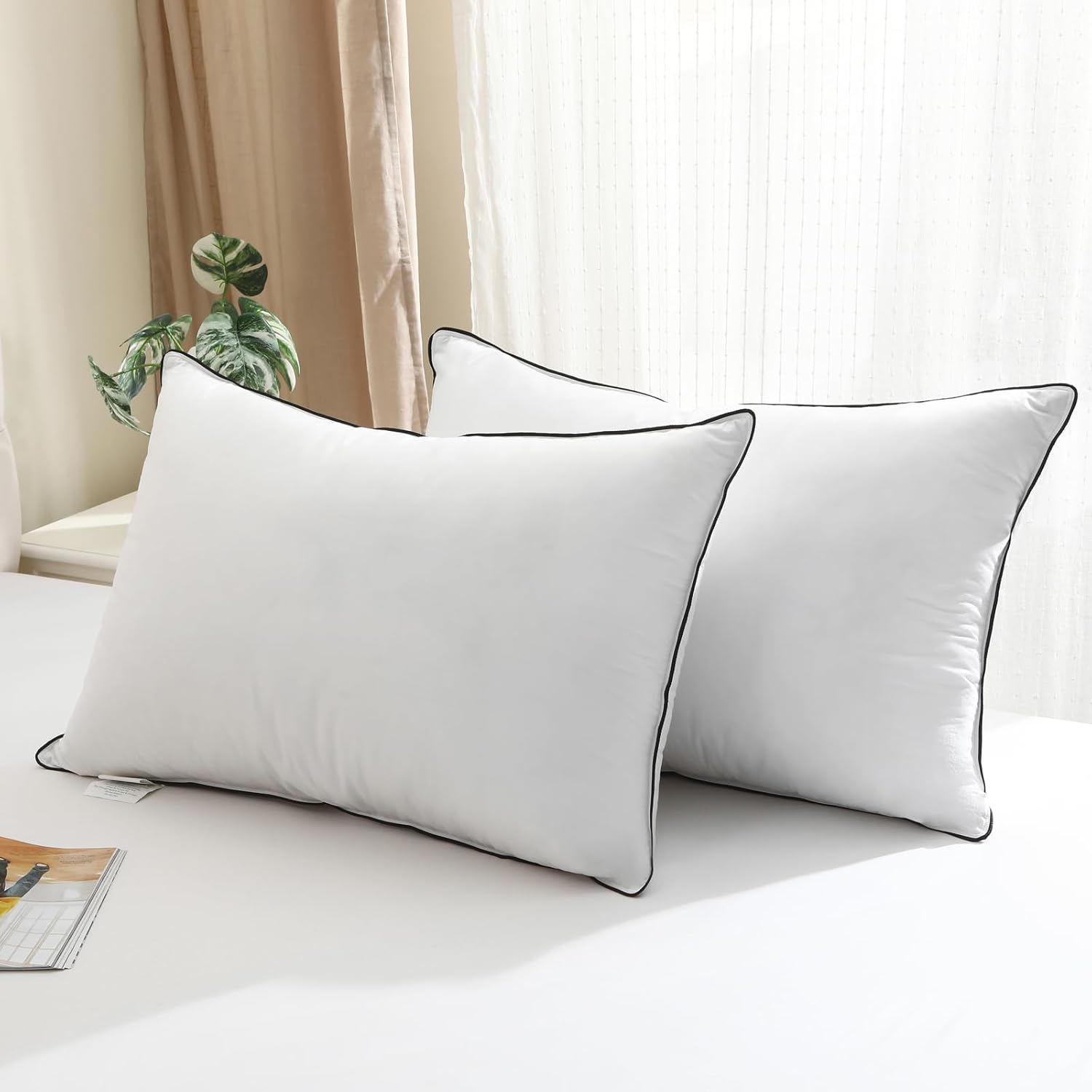
For sleepers who hate the “sinking” feeling of soft down, the BPC Feather & Down Blend offers a more substantial, structured feel. By using a core of feathers wrapped in soft down, you get the plush touch with firm internal support.
- The Experience: This pillow mimics the classic, heavy feel of historic European hotel pillows. It is weighted and holds its shape exceptionally well for side sleepers.
- Pros: Excellent for spinal alignment, Oeko-Tex certified (chemical-free).
- Cons: Feathers are naturally heavier and lack the “airy” feel of pure down.
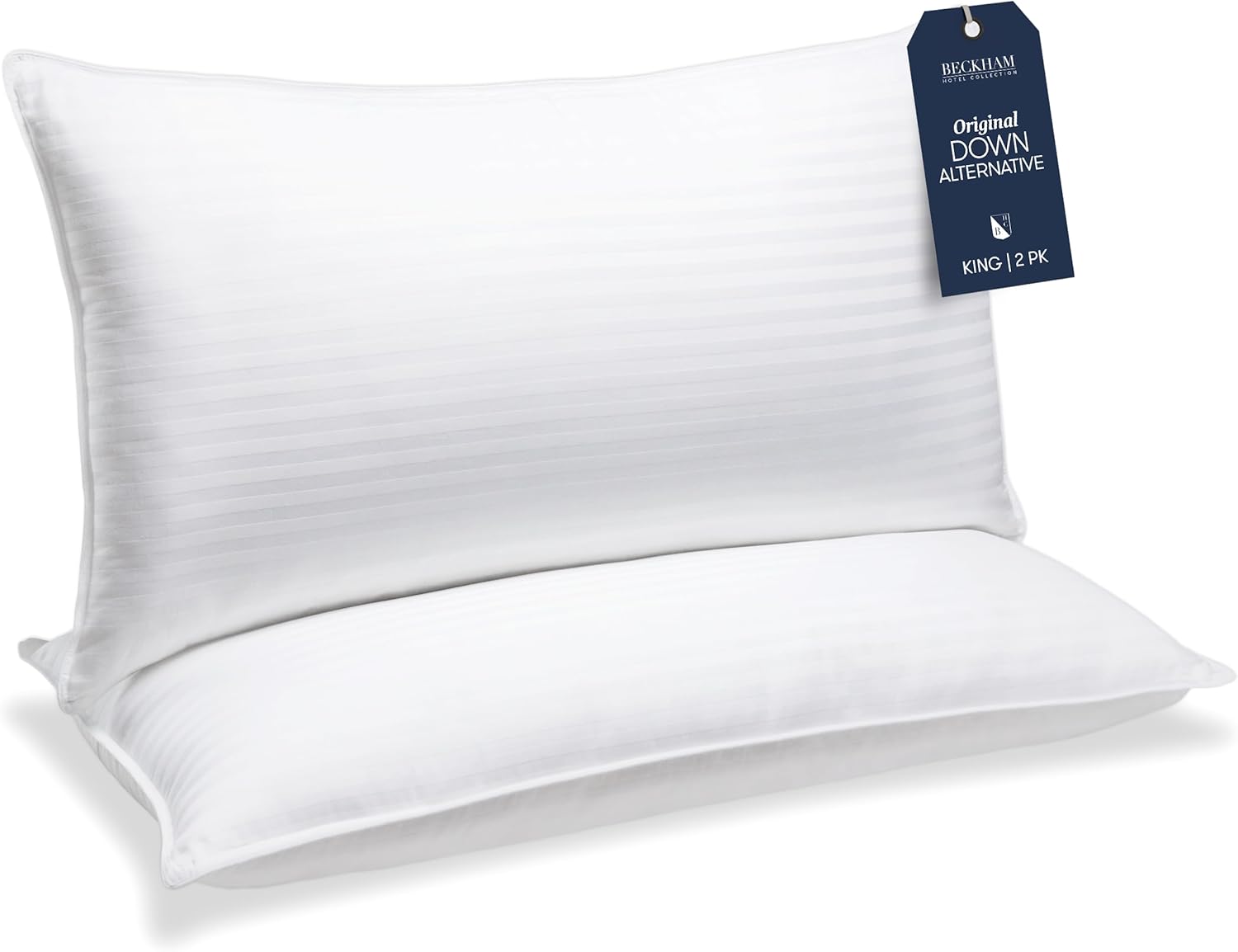
The Beckham Hotel Collection has become a legendary “budget-luxury” pick. Instead of animal down, it uses gel-infused fibers that provide a “bounce-back” support similar to expensive latex.
- The Experience: These pillows are famous for their “no-shift” construction. They stay cool to the touch all night, making them the best option for hot sleepers.
- Pros: Incredible price for a set of two, machine washable, allergen-free.
- Cons: Synthetic fill has a shorter lifespan than pure down (usually 2–3 years).
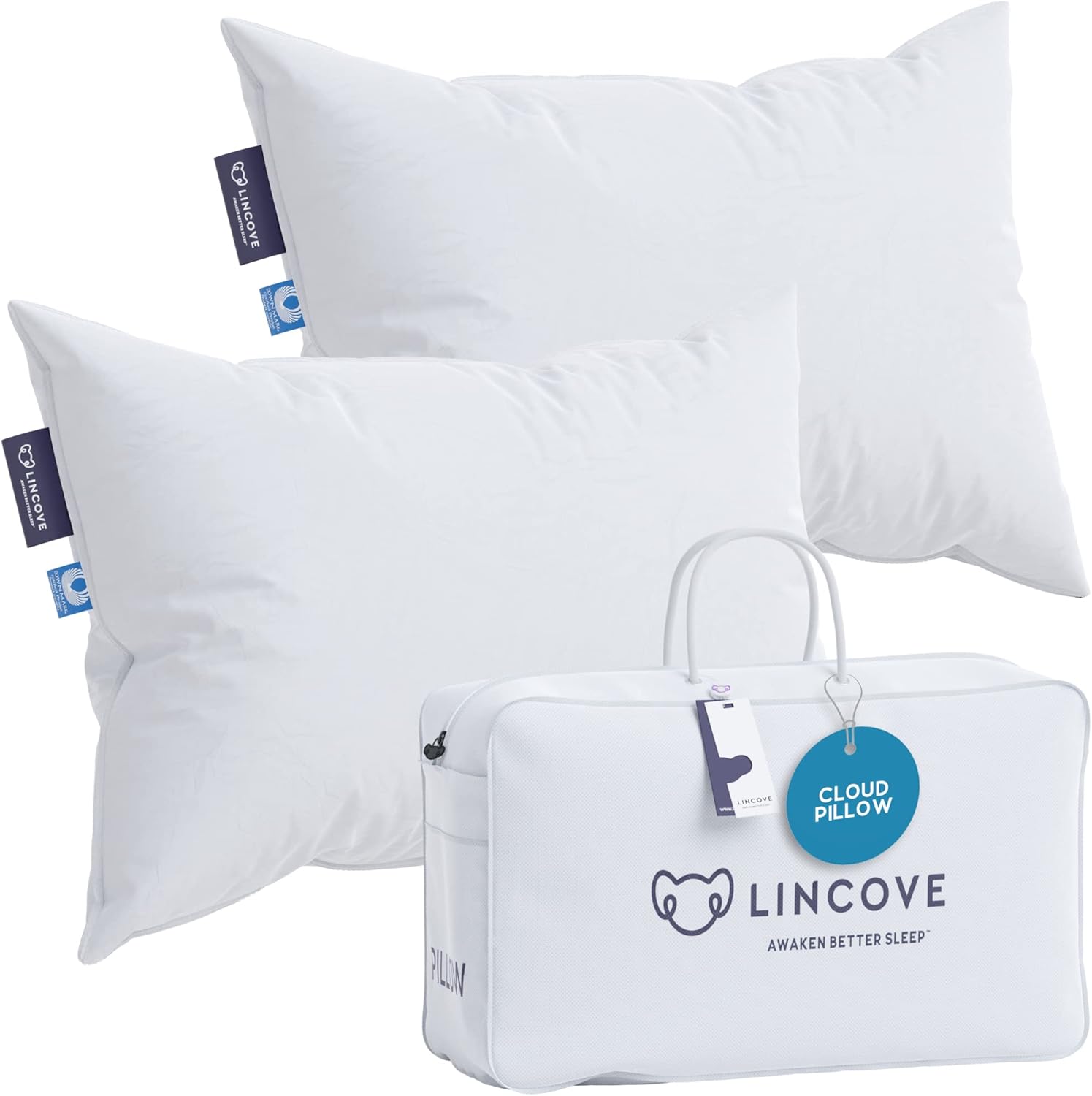
If money is no object when it comes to sleep hygiene, the Lincove Canadian Goose Down is the gold standard. It features a massive 750+ fill power of clean, ethically sourced Canadian down.
- The Experience: Unlike standard “down” pillows that are often mixed with sharp feathers, this is pure down. It contours perfectly to the neck, making it ideal for those with joint sensitivity.
- Pros: Heirloom quality, handcrafted, incredibly breathable shell.
- Cons: Higher price point; needs daily fluffing to maintain its peak loft.
Pillow Fill Comparison: Support and Sensation
| Feature | Down (Goose/Duck) | Feather (Goose/Duck) | Memory Foam (Viscoelastic) |
| Material Composition | Soft, fluffy undercoating (clusters) of waterfowl; no quills. | Outer feathers with central quills; often mixed with down. | Man-made viscoelastic polyurethane foam; solid or shredded. |
| Primary Sensation | Weightless, “cloud-like” softness; highly compressible. | Firmer, more structured support; has a weighted feel. | Slow-response sink; “hugs” and contours to the shape of your head. |
| Best For Position | Stomach Sleepers (low loft) & Combination Sleepers. | Back Sleepers & those needing moderate, moldable support. | Side Sleepers & those with chronic neck pain. |
| Neck Pain Relief | Variable; often too soft to maintain alignment unless high fill power is used. | Good; quills provide a firmer base than pure down. | Superior; provides consistent, rigid spinal alignment. |
| Breathability | Excellent; natural fibers allow high airflow (stays cool). | Very Good; allows better airflow than many synthetics. | Can trap heat; often requires cooling gels or ventilation channels. |
| Durability | Excellent; can last 5-10 years with proper care. | Good; can last several years, but feathers can break down. | Excellent; maintains shape for 3-5 years without fluffing. |
1. Down: The Epitome of Plush Luxury
Down is the soft, insulating material found beneath the tougher outer feathers of waterfowl.1 It is lightweight, incredibly lofty, and moldable—the essence of a five-star hotel pillow.2
The Downside of Down
- Pros: Exceptional softness, highly breathable, molds perfectly to the head, and offers the highest comfort factor.3
- Cons: Most expensive, requires frequent daily fluffing to restore loft, and can be an allergen concern (though high-quality down is usually cleaned extensively).4
- Best Use Case: Ideal for stomach sleepers who need a pillow to compress flat to prevent neck strain, or combination sleepers who love to shift positions.5 Look for a Fill Power of 700+ for genuine luxury and durability.
Key Takeaway: Choose down if your priority is comfort and moldability over rigid, consistent support.
2. Feather: The Structured, Traditional Support
Feather pillows are often a blend of small feathers and a small percentage of down (like the 90% feather/10% down chamber design). The outer feathers contain quills, which give the pillow a more structural and firmer feel than pure down.6
The Feather Breakdown
- Pros: More affordable than pure down, firmer structure prevents excessive collapse, and the core holds shape well for back sleepers.
- Cons: Quills can occasionally poke through the casing (mitigated by high thread-count shells), and the pillow can be heavier and noisier.7
- Best Use Case: Excellent for back sleepers who need medium firmness to support the natural curve of the neck, or those looking for the feel of natural fill without the pure down price tag.
Key Takeaway: Choose feather if you want natural softness with an underlying firmness and a classic, structured look.
3. Memory Foam: The King of Consistent Support
Memory foam (viscoelastic foam) is a polymer engineered to react to heat and pressure, causing it to slowly contour and cradle your head and neck.8 It is the top choice for therapeutic and orthopedic support.
The Memory Foam Mandate
- Pros: Superior support for spinal alignment, excellent for pressure point relief, naturally hypoallergenic, and requires virtually zero maintenance (no fluffing).9
- Cons: Can sleep hot (unless gel-infused or shredded), has an initial “off-gassing” chemical odor, and is not moldable (it retains its set shape).10
- Best Use Case: The consensus pick for side sleepers who need a high-loft, firm pillow to keep the neck aligned with the spine, and for anyone suffering from chronic neck pain.11
Key Takeaway: Choose memory foam if support and pain relief are your absolute top priorities.
Final Verdict: Matching the Material to Your Sleep Style
| Sleeping Position | Ideal Pillow Material | Reason |
| Side Sleeper | Memory Foam (High Loft) | Provides necessary, non-collapsing firmness to fill the large shoulder gap. |
| Back Sleeper | Feather/Down Blend (Medium Loft) | Offers moldable cushion without pushing the head too far forward. |
| Stomach Sleeper | Pure Down (Low Loft) | Compresses nearly flat to minimize dangerous neck strain and twisting. |